
To decide between repairing or replacing a roof, consider its age, damage extent, and decking condition. A spot repair works best for isolated issues like missing shingles or minor flashing leaks affecting under 25% of a sound roof less than 15 to 20 years old. A full replacement is necessary if leaks are widespread, the decking is compromised, shingles are cupping or losing granules, or the system has reached the end of its lifespan. Choosing the right option protects your home’s structure while preventing wasted repair costs.
The 25% Rule and Structural Scope
Building codes and roofing standards rely on the 25% Rule to determine repair viability. If storm damage, physical wear, or moisture intrusion compromises more than 25% of a contiguous roof plane within a one-year timeframe, regional building codes generally mandate a full replacement.
Beyond code compliance, exceeding the 25% boundary shifts project economics:
- Field Integrity: Shingles and underlayments form a shingled water barrier. Once a quarter of that barrier is compromised, surrounding seals fail at an accelerated rate.
- Labor Parity: Mobilizing staging, safety equipment, waste disposal, and procurement for multiple disconnected patches approaches the labor overhead of a complete tear-off.
- Underlayment Breakdown: Shingles act as a primary watershed, but the underlying moisture barrier bears prolonged water contact. Widespread surface gaps expose the underlayment to moisture that migrates laterally beneath undamaged areas.
When physical damage is isolated to a single slope such as impact from a fallen limb on one rafter run a targeted repair restores watertight performance. When physical deterioration spans opposing slopes, ridges, and valleys, localized patches fail to resolve systemic moisture risk.
Scenarios Calling for Targeted Roof Repair
Many roofing issues do not warrant a full tear-off. When the underlying substrate remains sound and the roofing assembly has substantial remaining lifespan, targeted service restores the barrier efficiently.
1. Isolated Wind Blow-Offs
Strong gusts can tear off individual shingles. If surrounding tabs remain pliable and intact, a technician can easily break the sealant, replace damaged shingles, and secure new fasteners without disturbing the rest of the roof.
2. Flashing and Penetration Failure
Most leaks happen at roof transitions like chimneys, skylights, and vent pipes where metal flashing pulls loose due to thermal expansion. Replacing or resealing step and counter-flashing resolves the leak without altering adjacent slopes.
3. Isolated Ice Dam Backups
Freeze-thaw cycles can push meltwater under eaves. If attic rafters show no rot or mold, clearing the blockage, repairing damaged drip edges, and adding targeted ice-and-water membranes will fix the issue.
Physical Indicators Demanding Complete Roof Replacement
When roofing components suffer systemic material degradation, spot patches simply move the moisture leak point to the next weakest joint.
| Diagnostic Indicator | Physical Mechanism | Corrective Action |
| Pervasive Granule Loss | Asphalt bed dries out; gutters accumulate heavy mineral silt | Complete Tear-Off & Replacement |
| Curling or Cupping | Volatile oils evaporate; tab edges lift or curl inward | Complete Tear-Off & Replacement |
| Spongy or Deflecting Decking | Continuous water intrusion rots OSB or plywood sheathing | Complete Tear-Off & Decking Re-sheet |
| Deep Moss & Lichen Rooting | Micro-roots pry beneath shingle laps, holding continuous water | Complete Tear-Off & Replacement |
| Multi-Point Attic Leaking | Water staining on multiple rafters during heavy wind-driven rain | Complete Tear-Off & Replacement |
Advanced Thermal Breakdown
Years of UV exposure deplete the volatile oils that keep asphalt shingles flexible. As shingles turn brittle and shed their protective granules, solar radiation causes surface micro-fractures. Nailing into aged, dried-out shingles during a patch job often cracks neighboring tabs, creating new leak points.
Structural Substrate Rot
A roof requires a solid wooden foundation. Poor attic ventilation traps moisture, rotting the underlying plywood or tongue-and-groove boards, a problem often hidden beneath seemingly intact shingles, as seen during a recent structural audit in Gladwyne, PA. Spongy, deteriorated decking cannot be patched; the roof must be stripped to replace the damaged wood.
Evaluating Roof Age Against Expected Lifespans
Roofing materials have distinct functional lifespans:
- 3-Tab Asphalt Shingles: 15 to 20 years
- Architectural / Dimensional Shingles: 20 to 30 years
- Cedar Shakes: 25 to 35 years (contingent on local moisture and moss management)
- Standing-Seam Metal: 50+ years
A 6-year-old architectural roof suffering storm damage warrants targeted repairs. Conversely, performing patchwork on an 18-year-old asphalt roof is inefficient. New replacement shingles cannot match the weathered patina of an aging field, creating an uneven appearance. More importantly, repairing one corner of an aged roof leaves the remaining sections vulnerable to imminent failure.
The Exterior Envelope: Integrating Siding, Gutters, and Walls
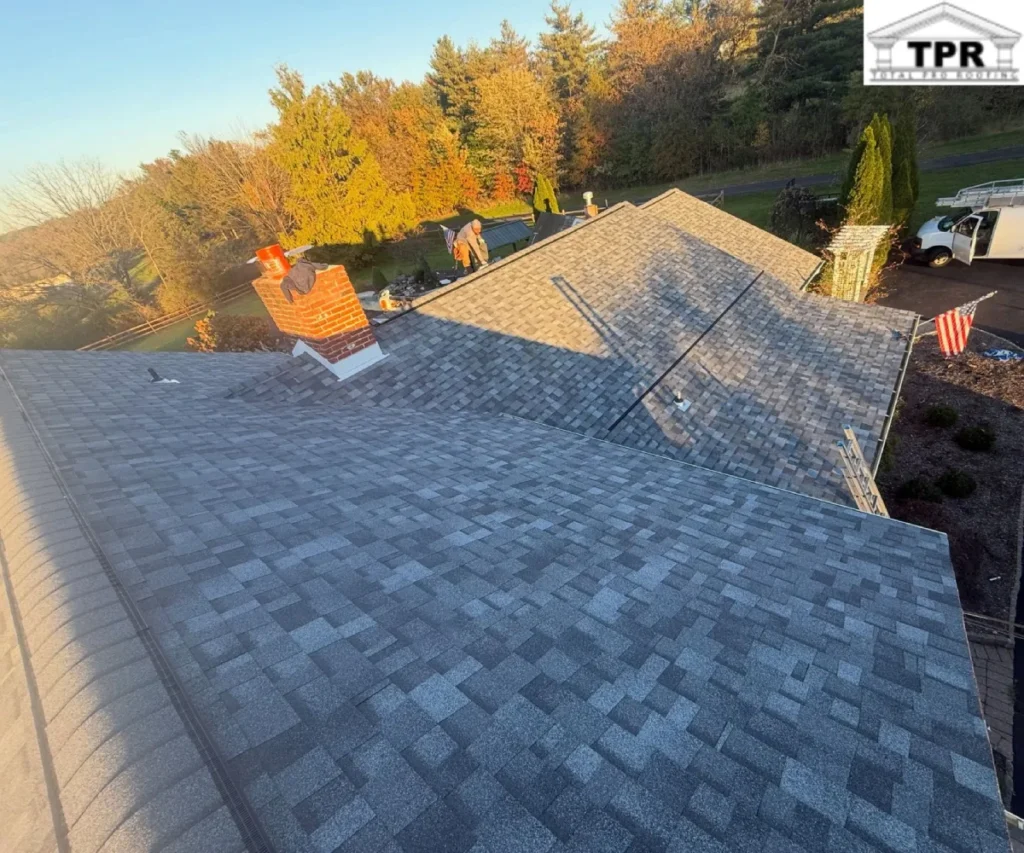
A roof cannot function effectively without properly integrated siding, gutters, and perimeter trim. During an exterior evaluation for a residence in Bryn Athyn, our team traced a chronic interior ceiling leak not to the roof plane, but to deteriorated wall siding that allowed wind-driven water to run behind the step flashing.
Securing the building envelope requires coordinating all exterior surfaces:
- Expert Siding Solutions: When wall-to-roof transitions fail, expert siding solutions prevent driving rain from migrating behind flashing channels and rotting internal wall plates.
- High-Quality Panels and Planks: Upgrading exposed exterior walls with high-quality panels and planks creates a continuous, impact-resistant shield against wind-driven precipitation.
- Coordinated Water Drainage: Gutters must carry roof runoff away from fascia boards and foundation lines without overflowing.
An exterior renovation should instill style and pride by preserving your home’s character. Coordinating wall cladding and roofing protects aesthetic appeal through matching profiles and tones, while commercial-grade materials deliver long-lasting beauty and resilience against harsh weather.
On-Site Diagnostic Procedures
A thorough assessment requires systematic inspection above and below the roof deck.
When diagnosing a property, an experienced roofing contractor in Gladwyne, PA follows a clear evaluation sequence:
- Attic Moisture Diagnostics: Technicians inspect the roof’s underside for dark water rings, rusted fasteners, and adequate soffit-to-ridge airflow.
- The Pliability Test: Lifting a shingle corner to 45 degrees reveals material condition. If the shingle cracks across the bend, the material is brittle and cannot accept standard repair nailing without breaking.
- Flashing and Valley Calibration: Inspectors examine whether valley metal has corroded, whether step flashing was counter-flashed correctly, and whether old roofing cement has cracked.
- Deck Load Verification: Technicians walk the surface plane by plane to detect subtle dips, sponginess, or rafter deflection.
Working with an established roofing contractor in Gladwyne gives homeowners access to written diagnostics, clear photo documentation, and straightforward estimates. Proper installations utilize multi-layer underlayments and reinforced drip edges designed to provide unbeatable protection against freeze-thaw cycles and high winds.
Financial Planning: Insurance, Energy, and Resale
Balancing the immediate out-of-pocket cost of a spot repair against the capital cost of a replacement requires weighing three considerations:
Insurance Claims
Homeowner policies often cover storm-related wind or hail damage minus the deductible. A qualified contractor provides high-resolution photos and precise measurements to streamline adjuster reviews and claim approvals.
Attic Ventilation and Energy Performance
Poor ventilation traps heat and moisture, driving up cooling costs and degrading materials. A full replacement allows for continuous ridge vents and intake baffles, stabilizing indoor temperatures and preventing condensation.
Resale Value and Inspection Contingencies
A new architectural roof typically recovers 60% to 70% of its cost at resale. It also eliminates inspection contingencies and repair credits tied to aging, patched systems while transferring long-term warranties to prospective buyers.
People Also Ask
How long does an asphalt shingle roof last?
Standard 3-tab asphalt shingles last between 15 and 20 years. Modern architectural shingles typically last 25 to 30 years with proper attic ventilation and routine maintenance.
Can you install new shingles over existing shingles?
While building codes permit a second layer in some areas, overlaying shingles is not recommended. It hides underlying decking rot, prevents the installation of leak-barrier membranes, adds excess structural weight, and traps heat, which significantly shortens the lifespan of the new shingles.
Does homeowner’s insurance cover a roof replacement?
Insurance typically covers full replacement when damage results from sudden, accidental weather events like severe wind, hail, or fallen trees. It does not cover roofs that fail due to normal aging or deferred maintenance.
What does it cost to repair a localized roof leak?
Minor repairs such as resealing flashing, replacing a plumbing boot, or resetting individual wind-damaged shingles generally cost between $300 and $1,200, depending on roof slope, height, and water penetration depth.
What are the main signs of rotted roof decking?
Common indicators of rotted decking include spongy footing when walking on the roof, visible dipping or sagging along the roofline, water staining on attic rafters, and mold growth on the underside of the sheathing.
Making the Decision for Your Home
Property owners should feel clear and informed about their exterior renovations. Working with a dedicated provider like Total Pro Roofing ensures that every recommendation is backed by structural facts, clear pricing, and dependable warranties. Homeowners receive ongoing support through our trust service, ensuring projects stay on budget and on schedule. Selecting the right materials guarantees that your investment delivers long-term quality and durability, protecting your property against heavy rain, hail, and winter freezes.
When evaluating next steps, partnering with an experienced Gladwyne roofing contractor ensures your home receives the specialized attention and craftsmanship it requires.
To review repair options, full replacement plans, or financing terms, contact us today to schedule a comprehensive on-site assessment.